Submerged Pump Type Ozone Water Disinfection Systems

Customization: Available
Certification: ISO9001, CE
Dielectric Material: Glass Tube

Product Description

Basic Specifications

Model NO.
WTS-20
Cooling Method
Water-Cooling
Gas Source
Air
Frequency
50-60Hz
Installation
Submerged Into Water
Type
Ozone
Ozone Tube
Stainless Steel Housing and Rubber Tube
Submerged Pump
SS, Plastic
Ozone Output
5g-100g/Hour
Control Panel
SS, Carbon Steel
Transport Package
Plywood Case
HS Code
842121999
Production Capacity
120 Units/Month

Product Description

Ozone is an unstable gas comprising of three oxygen atoms. The gas readily degrades back to oxygen, forming a free oxygen radical during this transition. This free radical is highly reactive and short-lived, typically surviving only for milliseconds under normal conditions.

As a colorless gas, Ozone has a distinct odor similar to the air after a major thunderstorm. It provides superior disinfection effectiveness against bacteria and viruses compared to traditional chlorination. Furthermore, its oxidizing properties effectively reduce concentrations of iron, manganese, and sulfur, eliminating unpleasant taste and odor problems.

Operating Principle:

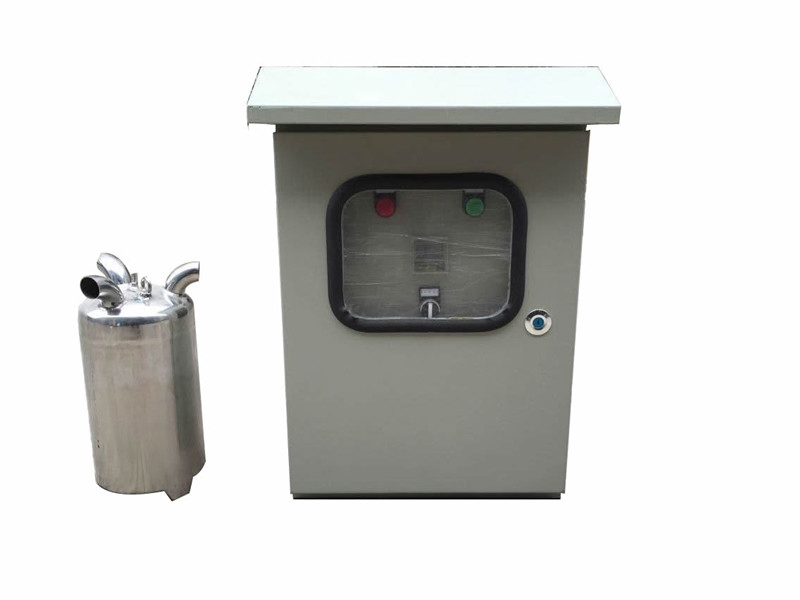
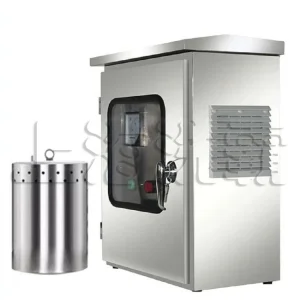
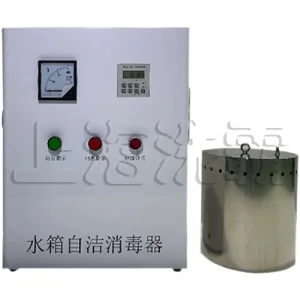
The circulation tank is placed in the lower middle part of the water tank to ensure even circulation. When the water level reaches the design limit, the control cabinet activates the high-voltage power. Strongly-oxidized gas is generated and flows through the pipeline to the aeration section. Simultaneously, the immersible pump circulates the disinfected water back into the tank, ensuring the stagnant water is thoroughly treated until water quality is guaranteed.

Categorization of Products:
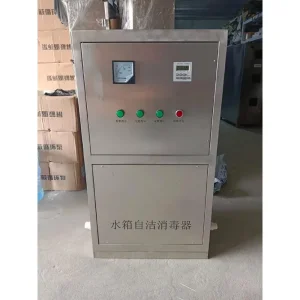
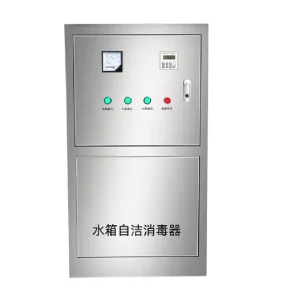
  • Water-tank ozone self-cleaning disinfector
  • Water-tank micro-electrolysis self-cleaning disinfector

Embedded Ozone Disinfector Specifications

Model Volume Adaptable for Water Tanks (m³) Power (W)
Secondary Water Supply First Water Tanks
WTS-10 10-30 10-50 280
WTS-20 30-60 50-80 350
WTS-30 60-150 80-200 480

Applications

This self-cleaning disinfector is widely utilized in various water storage environments, including:
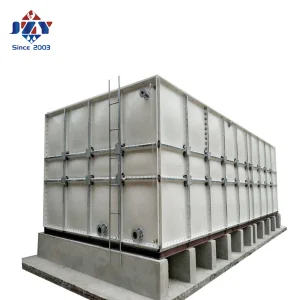
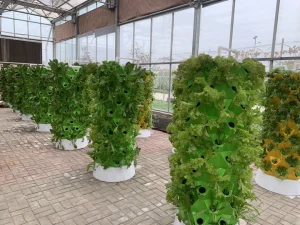
  • High-level cisterns and living water tanks
  • Clean water pools for sewage treatment works
  • Fire water tanks and swimming pools
  • Fountain springs and waterscape cisterns
  • Aquatic products, aquaculture, and oceanic world storage
  • Food and beverage industry water pools

Frequently Asked Questions

How does ozone compare to chlorine for disinfection?
Ozone has a significantly greater disinfection effectiveness against bacteria and viruses compared to chlorination. It also helps reduce iron, manganese, and sulfur levels.
Is the ozone gas stable in the water?
No, ozone is unstable and will degrade back to oxygen within a timeframe of a few seconds to 30 minutes, depending on water chemistry, pH, and temperature.
What is the difference between the two product types?
The Ozone disinfector uses aeration to treat water, while the Micro-electrolysis version uses an electro-chemical reaction to excite chlorine ions to generate oxidizing substances like HCLO and CLO2.
Does the user need to set the operation timer?
No, the operation time for the self-cleaning disinfector is pre-set at the factory before delivery, so there is no need for the user to reset it.
What happens to the insoluble metal oxides formed by ozone?
Ozone oxidizes iron and manganese into insoluble metal oxides, which are then effectively removed from the water through post-filtration.
How is the water circulation managed inside the tank?
An immersible pump is used to send disinfected water back into the tank, creating a continuous circulation that prevents water from becoming stagnant.

Related Products