Ozone Water Disinfection Systems
For nearly a century, ozone has been used to disinfect water for a variety of applications and industries. Ozone (O3) is comprised of three oxygen atoms bound together. When one atom has the weakest hold to the others, that atom can transfer electrons which bind with organic substances like bacteria and viruses. This process causes oxidation, which changes the makeup of the substance and can kill or stop the reproduction of harmful bacteria or micro-organisms. The ozone gas produced provides an exceptional method for disinfecting water streams.
Operating Principle:
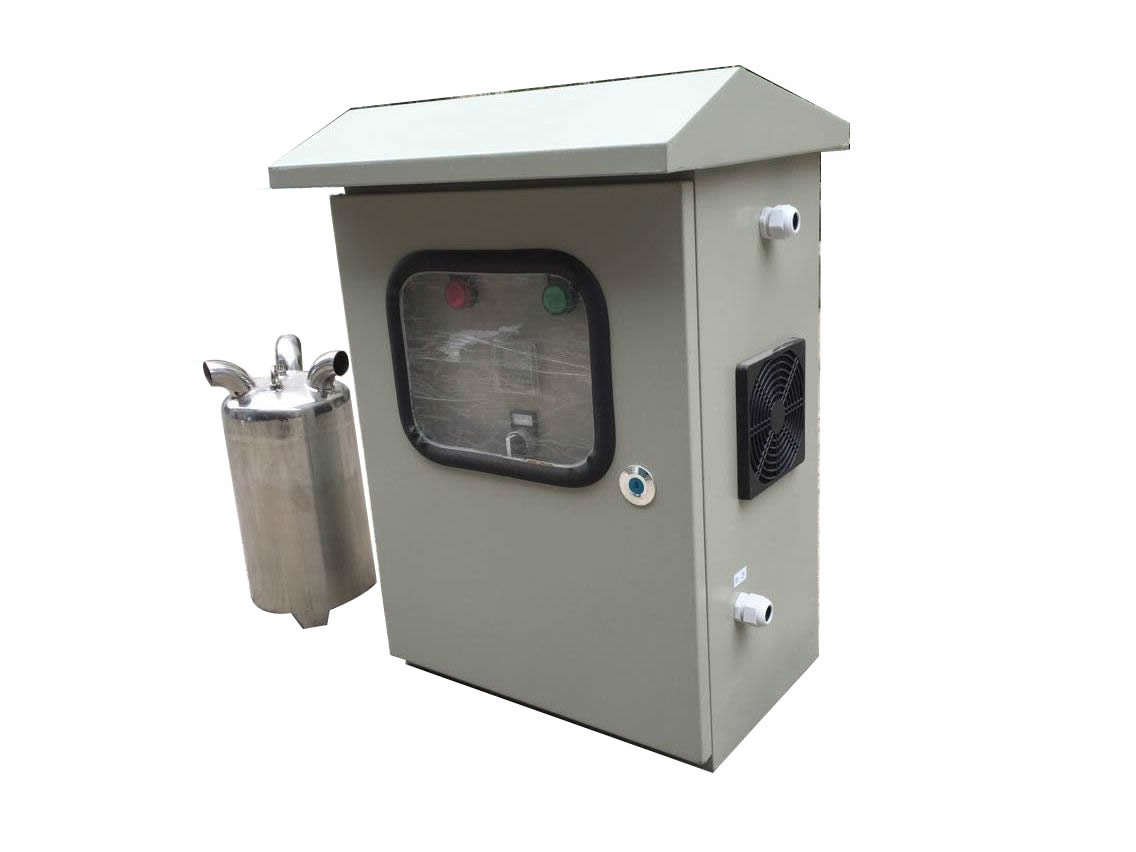
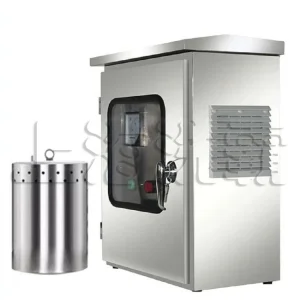
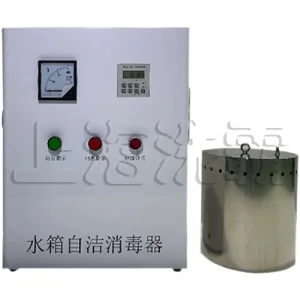
Place the circulation tank of the self-cleaning sterilizer in the lower middle part of the water tank to guarantee even circulation. When the water level reaches the top limit, the electric control cabinet starts the high-voltage power. Strongly-oxidized gas generated by the immersible pump flows through the pipeline to the aeration section to disinfect the water. Simultaneously, the pump sends the disinfected water back into the tank to circulate stagnant water until thorough disinfection is completed.
Categorization of Products:
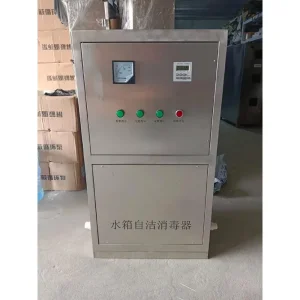
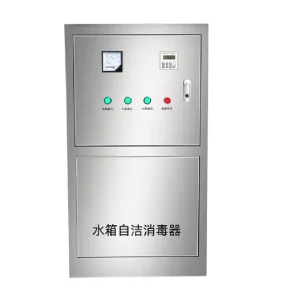
1. Water-tank ozone self-cleaning disinfector
2. Water-tank micro-electrolysis self-cleaning disinfector
Micro-electrolysis Principle:
The system initiates an electro-chemical reaction to excite chlorine ions dissolved in water, generating oxidized substances such as HCLO, CLO2, O3, O, and Cl2. These matters diffuse and circulate to treat the tank walls and all internal water, damaging bacteria and algae cells to achieve complete disinfection.
| WTS-10 |
10-30 |
10-50 |
280 |
| WTS-20 |
30-60 |
50-80 |
350 |
| WTS-30 |
60-150 |
80-200 |
480 |
The water-tank self-cleaning disinfector is widely used in:
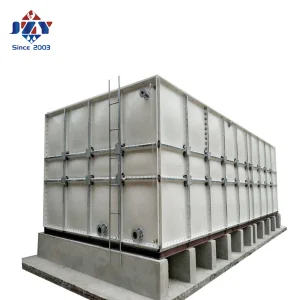
- High level cisterns and water storage tanks
- Living water tanks and clean water pools
- Sewage treatment works and fire water tanks
- Fountain springs and waterscape cisterns
- Swimming pools and aquaculture storage
- Food and beverage industry water pools
?
Frequently Asked Questions
How does ozone kill bacteria and viruses?
Ozone (O3) acts through oxidation. It releases an oxygen atom that binds to the organic makeup of bacteria and viruses, destroying their cell walls or disrupting their reproductive capabilities.
Is the installation process complex?
No, the system is designed for ease of use. The embedded models are submerged directly into the water tank, and the control settings are pre-configured at the factory before delivery.
What is the difference between ozone and micro-electrolysis?
Ozone units use O3 gas for direct oxidation. Micro-electrolysis units excite existing chlorine ions in the water to create a suite of oxidizing agents like HCLO and CLO2 to achieve disinfection.
Where can these disinfectors be used?
They are ideal for high-level cisterns, swimming pools, fire water tanks, and storage tanks in industries such as food processing, aquaculture, and beverage production.
What are the power requirements for the WTS series?
Power requirements vary by model: WTS-10 uses 280W, WTS-20 uses 350W, and WTS-30 uses 480W, depending on the volume of the water tank being treated.
Does the system prevent algae growth?
Yes, the oxidation process effectively damages microbiological cells of both bacteria and algae, preventing growth and keeping the water clear.
 Toilvora Toilet