In the world of plumbing, one often wonders, "what is the difference between traditional and modern toilets?" This question opens a dialogue about the evolution of restroom technology. Experts like Dr. Emily Carter, a renowned plumbing consultant, emphasize that "the shift from traditional to modern toilets reflects advancements in efficiency and sustainability."
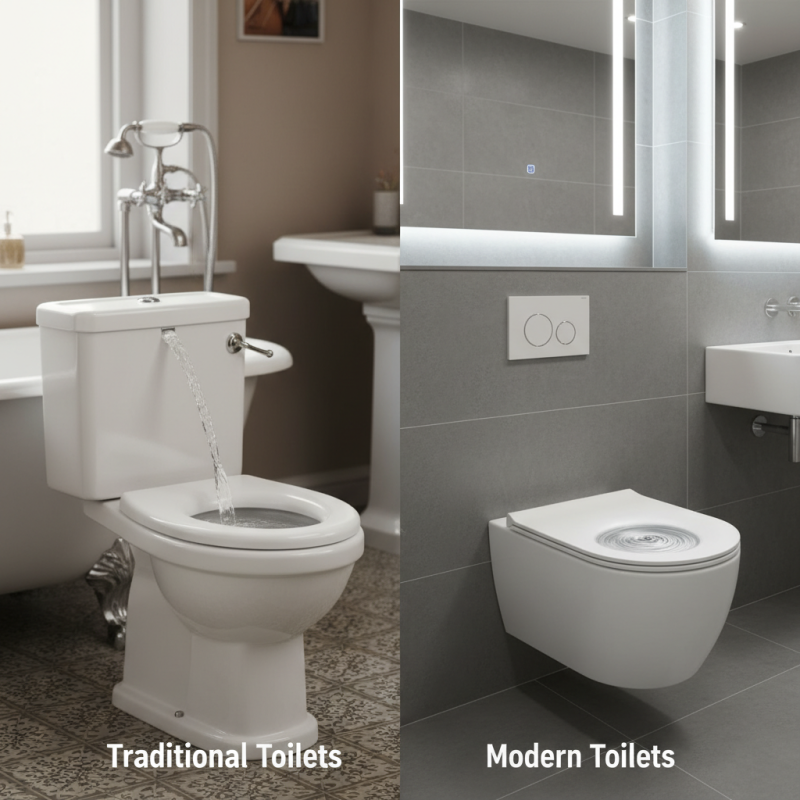
Traditional toilets typically feature a simple design. They rely on gravity to function and are often less efficient. On the other hand, modern toilets incorporate innovative technologies. These include dual-flush systems, which save water and enhance user experience. Dr. Carter notes, "Modern toilets are designed with user comfort and environmental impact in mind." This highlights a critical consideration as society moves toward sustainability.
Some people feel attached to traditional designs. They appreciate the nostalgia and simplicity, yet these models may not support new efficiency standards. As we examine these differences, we must reflect on what suits our needs best. The transition to modern toilets isn’t just about style; it’s about improving our daily lives and conserving resources. Each choice carries weight, making it essential to understand these differences fully.
Modern Toilet Features and Technologies
Modern toilets are designed with advanced features that enhance user comfort and hygiene. Unlike traditional models, modern toilets often boast dual-flush systems that save water. According to the Environmental Protection Agency (EPA), these systems can reduce water usage by 20-60%, contributing to sustainability efforts. Smart toilets now include heated seats, bidet functions, and even automatic lids, providing a luxurious experience that many find appealing.
Additionally, modern toilets often come equipped with self-cleaning technology. This innovation helps minimize the need for harsh chemicals, promoting a healthier bathroom environment. A 2020 report by the American Society of Plumbing Engineers highlighted that self-cleaning toilets can reduce bacterial contamination by up to 80%. Nonetheless, the initial investment for these high-tech toilets can be significant, leading some consumers to ponder their practicality. Accessibility features, such as toilet height adjustments and ergonomic designs, also cater to diverse needs but may not fit every bathroom layout seamlessly.
Modern vs Traditional Toilets: Key Features Comparison
Traditional Toilet Design and Structure
Traditional toilets have a simple yet effective design. They typically consist of a bowl, tank, and flushing mechanism. The bowl is made from ceramic and is usually mounted to the floor.
The tank, usually above the bowl, holds water that is released during a flush. This classic setup relies heavily on gravity for flushing.
The flushing mechanism in traditional toilets can vary. Some use a pull chain, while others have a lever on the tank. These mechanisms may not be as intuitive as modern systems. A common drawback is their tendency to clog, especially with older plumbing. Regular maintenance is essential to keep them functioning.
Tips: To avoid clogs, consider what you flush. Items like wipes and paper towels can cause blockages. Keep your toilet's tank clean to ensure effective flushing.
In terms of environmental impact, traditional toilets often use more water per flush. Some models can consume up to 3.5 to 5 gallons. With rising water costs, it’s worth reflecting on the long-term sustainability of your choice. Modern alternatives conserve water, making them appealing.
Water Efficiency: Comparing Consumption and Sustainability
Water efficiency is a pressing concern in modern society. Traditional toilets often use a substantial amount of water per flush, typically around 3.5 to 7 gallons. In contrast, modern toilets are designed for water conservation. These fixtures usually use about 1.28 gallons per flush or less. This difference can lead to significant water savings over time.
The sustainability of toilet choices also impacts household budgets. An individual can save hundreds of gallons annually by switching to a modern toilet. However, many traditional models still exist in older homes, highlighting a gap in understanding water efficiency. Homeowners might be unaware of how their choices affect the environment. This lack of awareness can lead to wasted resources and increased utility bills.
Installation of a modern toilet may not be simple for everyone. Factors like plumbing compatibility or costs can act as hurdles. It's important for homeowners to weigh these considerations against the long-term savings both financially and environmentally. Reflecting on these aspects can lead to better choices and a more sustainable future.
Maintenance and Cleaning: Modern vs Traditional Toilets
Cleaning and maintaining toilets can vary greatly between modern and traditional designs.
Modern toilets often feature efficient flushing systems. This leads to less buildup of residue over time. Their sleek surfaces minimize grime, making cleaning easier. A quick wipe with a disinfectant can suffice.
Conversely, traditional toilets might have more nooks and crannies. These areas can trap dirt and bacteria, requiring more effort for thorough cleaning. Using a brush can feel frustrating.
The materials used also differ significantly. Modern toilets tend to use ceramic or plastic that resists staining. This prevents the need for harsh chemicals. Traditional models may attract more stains, necessitating stronger cleaning agents.
The ecological impact of various cleaning products is worth noting. Some eco-friendly options are available but may not be effective on tougher stains.
Another aspect is the frequency of maintenance. Modern designs often utilize advanced technologies that reduce the need for repairs.
Traditional toilets may need more attention, particularly if they experience leaks or clogs. These breakdowns can lead to unexpected costs. Homeowners should consider these factors when choosing the right option for their needs.
Each design has its challenges, and understanding them can lead to a more satisfying experience.
Cost and Installation Considerations for Both Types
When considering the cost and installation of modern versus traditional toilets, significant differences arise. Traditional toilets often have lower upfront costs, averaging around $150 to $300. However, installation can be complex, especially if the plumbing needs updating. The average installation fee is about $200 to $500, which can add to the initial investment.
Modern toilets, equipped with advanced features, tend to be pricier. Their costs typically range from $300 to over $1,000. Installation may also be more straightforward, yet incorporating smart technology can complicate the process. According to the Plumbing-Heating-Cooling Contractors Association, the total installation expenses for modern units can fluctuate between $400 and $800. While modern toilets promise higher efficiency, homeowners must consider the long-term benefits versus the initial expenses.
Efficiency is a crucial factor to keep in mind. Modern toilets use approximately 1.28 gallons per flush, compared to the 1.6 gallons of traditional models. This might lead to savings on water bills. Yet, the investment in more advanced technologies often requires careful budgeting. Ultimately, the choice hinges on individual needs and priorities, balancing immediate costs with future savings.
Modern vs Traditional Toilets: 5 Key Differences You Need to Know
| Feature |
Modern Toilets |
Traditional Toilets |
| Water Efficiency |
Low-flow options use 1.28 gallons per flush |
Standard models use up to 3.5 gallons per flush |
| Installation |
Generally easier with a compact design |
May require more space and complex installation |
| Cost |
Higher upfront cost but potential savings on water bills |
Lower initial cost but higher ongoing water expenses |
| Features |
May include heated seats, bidet functions, and smart technology |
Basic flushing mechanism with minimal features |
| Design |
Sleek, modern appearance |
Traditional, sometimes bulky styling |
FAQS
: Modern toilets enhance comfort and hygiene with features like dual-flush systems and heated seats.
They can reduce water usage by 20-60%, supporting sustainability efforts.
It minimizes the need for harsh chemicals and can cut bacterial contamination by up to 80%.
The initial cost is high, but they offer long-term savings and environmental benefits worth considering.
They can clog easily, especially with older plumbing. Regular maintenance is often necessary.
They can use 3.5 to 7 gallons, which is higher compared to modern models.
Many are unaware that their choices affect water use and costs, leading to wasted resources.
Yes, factors like plumbing compatibility and costs may complicate the installation process.
Higher water usage can lead to increased utility bills, reflecting on long-term financial sustainability.
Be mindful of what you flush, avoiding items like wipes and paper towels.
Conclusion
When exploring the question of what is the difference between traditional and modern toilets, several key factors come into play. Modern toilets often incorporate advanced features and technologies, such as dual-flush systems and smart sensors, enhancing user convenience and water efficiency. In contrast, traditional toilets are typically characterized by a simpler design and structure, focusing primarily on functionality without the added tech.
Another significant difference lies in water efficiency and sustainability; modern toilets are designed to use less water per flush, contributing to lower household water consumption. Maintenance and cleaning also present differences, with modern toilets often being easier to maintain due to innovative materials and designs. Lastly, cost and installation varied considerably between the two types, as modern models may require higher upfront investment but could save money in the long run through water savings. Overall, understanding these differences can help consumers make informed choices that suit their needs and preferences.

 Toilvora Toilet