Choosing the right toilet for your home is not as straightforward as it might seem. According to bathroom expert Emily Clarke, “Selecting the perfect toilet involves balancing comfort, efficiency, and style.” Her insights highlight how personal preferences and practical needs can influence our decisions.
In your quest to determine how to choose the right toilet for your home, consider various factors. For instance, the size of your bathroom plays a crucial role. A compact model may fit better in small spaces while providing functionality. Meanwhile, flush technology and design options should not be overlooked. Some models are more water-efficient, which is an environmental plus.
Don’t forget about comfort; the height of the toilet seat can significantly impact your experience. It’s easy to overlook these details, only to regret a hasty choice later. When deciding, weigh your priorities carefully. Remember, the right toilet can enhance your routine but requires thoughtful consideration.
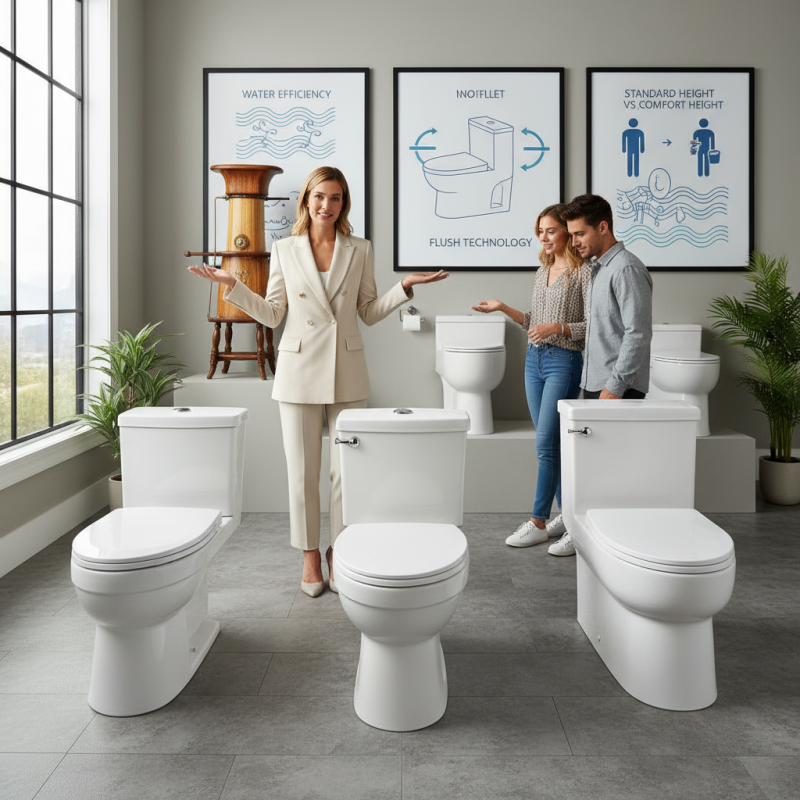
When choosing a toilet for your home, understanding the types available is crucial. There are three main styles: two-piece, one-piece, and wall-mounted toilets. Two-piece options are common and tend to be more affordable. They have a separate tank and bowl, making them easier to transport and install. According to industry data, over 70% of toilets sold are two-piece models.
One-piece toilets offer a sleek design and are easier to clean. They have fewer crevices for grime to accumulate. However, they often come at a higher price point. Wall-mounted toilets save floor space and are stylish, but installation can be complex. A recent study by the American Institute of Architects suggests that contemporary homes increasingly prefer wall-mounted designs for aesthetic reasons.
Water efficiency is another consideration when selecting a toilet. Models labeled as 'WaterSense’ can save over 20% more water than standard toilets. Yet, some consumers report lower flushing power with low-flow models. Balancing efficiency and performance is vital. Many homeowners find that their preferences evolve over time, leading to adjustments in their bathroom choices. Understanding these options helps ensure your toilet matches your needs and lifestyle.
Choosing the right toilet involves evaluating several key features. One primary consideration is the height of the toilet. Comfort height toilets are typically 16 to 18 inches high, making them easier for many individuals to use. Standard height toilets are around 15 inches. If you have family members with mobility issues, comfort height may offer a more accessible option. However, some may find them too tall, leading to discomfort.
Another important aspect is the flush mechanism. There are two main types: gravity-fed and pressure-assisted. Gravity-fed toilets use a siphoning action to flush waste. They are quieter but may not always clear waste effectively. Pressure-assisted models use air pressure to enhance the flush. While they’re generally more efficient, they can be louder and may require more maintenance.
Efficiency is also a vital factor. Look for toilets with high-efficiency ratings. These use less water per flush, which can reduce your utility bills. However, some low-flow models might not clear waste completely, leading to multiple flushes. This can defeat their purpose of saving water. Balancing these features is essential for finding the best fit for your home.
Choosing the right toilet for your bathroom starts with understanding your space. Measure the area where the toilet will fit. Ideal clearance around the toilet is at least 15 inches from the center to the wall. Too little space can lead to discomfort. If your bathroom is compact, consider a toilet design that saves space. A round bowl may be a better fit than an elongated one in small areas.
Next, installation requirements are vital. Ensure your plumbing can support the toilet you choose. Check the water supply line and drainage system. Different models may need varying setups. This can sometimes complicate installation. Do not overlook your bathroom layout. A toilet placed poorly may hinder accessibility or flow in the space. It’s crucial to visualize how the toilet will interact with other fixtures.
Finally, think about toilet height. Standard heights can be uncomfortable for some users. Comfort height toilets offer more accessibility. They are generally higher, making it easier to sit and stand. In a shared space, it’s worthwhile to consider everyone’s needs. Reflecting on these factors can lead to better decisions, enhancing your bathroom experience.
When budgeting for a new toilet, consider both initial costs and long-term savings. A quality toilet may require a higher upfront investment, but it can lead to lower water bills over time. Standard toilets use 1.6 gallons per flush. High-efficiency models can use as little as 1.28 gallons. This difference adds up, especially in a busy household.
Look into the potential rebates for water-saving toilets offered by local utility companies. This can ease your initial expenditure. You might also save on repairs and maintenance with a reliable model. Think about how often you repair your current toilet. Frequent fixes can become costly, reducing your savings.
Choosing the right toilet involves balancing cost and quality. An affordable model might be tempting, but it could lead to higher water bills and repairs. Reflect on your needs. If efficiency and longevity are priorities, investing more initially may prove wise. Being aware of these factors helps make a more informed decision.
When selecting a toilet, style and design are critical considerations. The ideal toilet should not only function well but also complement your home's aesthetic. According to a study by the National Kitchen & Bath Association, 45% of homeowners prioritize design when choosing bathroom fixtures.
Modern designs often feature sleek lines and minimalistic forms, appealing to contemporary tastes. The color and finish of a toilet can significantly impact the overall vibe of a bathroom. For instance, white remains a popular choice, but softer tones or bold colors can make a statement. However, consider the maintenance; darker colors may show stains more easily.
It’s essential to have a cohesive design throughout your space. Toilets come in various styles, such as traditional, modern, or rustic. Choose one that harmonizes with the rest of your décor. Some experts suggest that opting for a toilet that blends functionality with aesthetics can create a more inviting environment.
Reflecting on spatial considerations is also vital. A compact design may fit small bathrooms better, while a larger, more lavish model can enhance spacious areas. Pay attention to details like the height and bowl shape too. A well-thought-out choice can elevate your bathroom’s design significantly.
: Comfort height toilets are typically 16 to 18 inches high. This height can aid individuals with mobility issues. However, some may find this height too tall.
The two main types are gravity-fed and pressure-assisted. Gravity-fed toilets are quieter but may struggle with clearing waste.
High-efficiency toilets use less water per flush. This can lead to lower utility bills, but some models may not clear waste fully.
Measure the space where the toilet will fit. Ensure at least 15 inches of clearance from the center to the wall for comfort.
Check your plumbing. Ensure your water supply line and drainage can support the toilet model you choose.
A poorly placed toilet can hinder accessibility. Visualize its interaction with other fixtures to enhance accessibility.
While quality toilets may have a higher upfront cost, they can lead to lower water bills and fewer repairs over time.
In compact bathrooms, round bowls can save space compared to elongated ones. Ensure the design fits your bathroom well.
Check with local utility companies. They may offer rebates that can help lower your initial costs for high-efficiency models.
Think about your needs, efficiency, and maintenance. Balancing cost and quality ensures a wiser long-term investment.
When considering how to choose the right toilet for your home, it’s essential to understand the various types of toilets available on the market. From traditional gravity-fed models to modern composting options, each style offers unique features. Evaluating key aspects such as height, flush mechanism, and water efficiency can greatly enhance your comfort and sustainability.
Additionally, it's important to consider your bathroom space and installation requirements to ensure a proper fit. Budgeting is another crucial factor, as choosing a toilet not only involves the initial purchase cost but also long-term savings on water bills. Lastly, selecting a design that complements your home’s aesthetic will enhance the overall look of your bathroom. By following these guidelines, you can confidently select the perfect toilet that meets your functional needs and style preferences.
Toilvora Toilet